In this transaction, a company was going to import children's electric ride-on cars for use in recreational spaces. Everything seemed ready for customs clearance until, during the pre-clearance review, we detected several critical issues that could have turned into a serious border problem.
This was not a minor detail or a matter of interpretation: the product was intended for children, incorporated electrical components, and the company was not registered as a producer of electrical and electronic equipment, nor did it have demonstrable RoHS documentation.
The decision was clear: do not clear the goods.
Stopping the transaction in time prevented a customs hold, sanctioning proceedings, and costs that would have been much higher once the goods had reached the border.
This case shows why, when we are dealing with electrical products intended for children, reviewing the regulations before customs clearance is not a formality, but a necessity.
The company tells us the following about the products it plans to import:
“They are used exclusively within a recreational space, under the supervision of operators, and are not intended for domestic use.”
Based on this initial approach, the company understands that the ride-on cars do not fall within the category of domestic-use toys and that, therefore, certain regulatory obligations would not apply.
However, during the technical review prior to customs clearance, at Omnia we analyzed the product beyond the intended declared use and identified several key elements:
Under these circumstances, continuing with customs clearance meant assuming a risk that was not defensible. That is why the transaction was deliberately stopped before anything was submitted to Customs.
Launching a customs clearance when there are structural compliance failures is not a matter of “trying your luck.” It implies, almost certainly:
At Omnia, we work with a clear criterion: goods are only cleared when the transaction is defensible before any administrative inspection.
If it is not, we stop it. Even if that means delaying the transaction.

One of the key points in this case was the interpretation of the product’s use.
From a regulatory standpoint, what matters is not how the product is intended to be used, but rather:
In this case, the fact that the use was recreational and supervised does not exclude the application of toy regulations. If the product is an electrical toy intended for children, it is fully regulated, regardless of where it is used.
Therefore, the Toy Safety Directive and its implementing regulations in Spain apply.

Once it is confirmed that this is an electrical toy, other obligations associated with the product itself are automatically triggered, especially in relation to:
This is the point at which the structural problem of the transaction emerges.
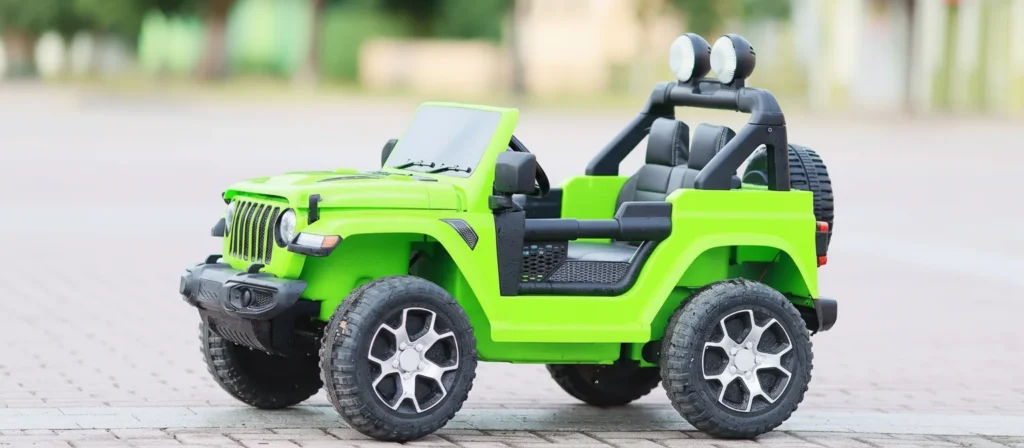
The electric ride-on cars incorporated a motor, batteries, wiring, and electronic components. From a legal standpoint, this makes them electrical and electronic equipment.
When a company places this type of product on the Spanish market for the first time, it acquires the legal status of PRODUCER of EEE, even if it is not the manufacturer.
In practice, this means that before marketing the product — and, in effect, before customs clearance — the company must:
In this case, none of these steps had been taken. Without this prior registration, customs clearance was not viable.
In addition, the product had to comply with RoHS regulations, which restrict the use of certain hazardous substances in electrical and electronic equipment.
This compliance is not based on a generic declaration. The importing company must be able to demonstrate it with:
As this documentation was not available, the risk was not only customs-related, but also sanction-related once the product was placed on the market.

This case clearly reflects the difference between processing an import and handling customs with sound judgment.
At Omnia Aduanas:
If you work with electrical products, toys, or goods intended for children, consult us before customs clearance.
Because the truly avoidable mistake is not that the goods are stopped, but not having stopped them in time.