Export checklist: everything your company needs for 2026

Home
/
/
Export checklist: everything your company needs for 2026

Table of Contents

  1. Key developments for 2026 in international trade
  2. Essential documentation for exporting in 2026
  3. Required licences and certificates
  4. Customs and tariffs
  5. Taxation and transport
  6. Conclusion

International trade is evolving rapidly, and 2026 is set to be a key year marked by new regulations, the digitalisation of customs processes and greater requirements in terms of sustainability and traceability.
For your company to export safely, efficiently and without extra costs, it is essential to have an up-to-date checklist that ensures nothing is left out.

Below is a practical guide with everything you need to consider before exporting in 2026.

Key developments for 2026 in international trade

The global landscape includes several changes that will directly affect exports:

Full customs digitalisation

Many countries will make the final transition to electronic clearance systems, eliminating manual processes. This means:

  • Faster procedures.
  • Fewer documentation errors.
  • Greater traceability.

Sustainability and carbon footprint requirements

Exporters will have to provide more information about:

  • Supply chain.
  • Sustainable origin of raw materials.
  • Emissions generated in transport and production.

Security and protection in the export of goods.

✔ Stronger controls on security and dual-use trade

Products with possible military or strategic uses will be subject to stricter controls.

Expected tariff changes

New trade agreements will enter into force in 2026, adjusting tariffs and rules of origin in several key markets.

Essential documentation for exporting in 2026

An export without the correct documentation may be held, generate fines or result in goods being returned.
This is the basic documentation checklist:

Commercial documentation

  • Commercial invoice (with the requirements of the destination country).
  • Packing list.
  • Sales contract / Purchase order.

Transport documentation

  • Bill of lading (B/L) for sea transport.
  • Air waybill (AWB) for air transport.
  • CMR for road transport.
  • Rail consignment note, if applicable.

Origin documents

EUR.1, ATR or Form A, depending on trade agreements.

Certificate of origin (CO).

Export documentation

Customs documentation

  • SAD or electronic equivalent.
  • Prior safety and security declarations (ENS, EXS).
  • Correct HS codes.

Additional documentation

  • Technical data sheets.
  • Declarations of conformity.
  • Sustainability certificates.

Required licences and certificates

Depending on the product and destination, your company may need:

Customs and tariffs

Customs remains the main critical point in any international operation.
In 2026, these are the key points:

Correct tariff classification (HS Code)

It is essential to correctly determine the goods code:

  • Avoids penalties.
  • Optimises tariffs.
  • Ensures clearance without delays.

Application of trade agreements

Before exporting, check whether the destination country has:

  • Preferential agreements.
  • Tariff reductions or eliminations.
  • Specific rules of origin.

Rules of origin

Necessary to obtain tariff preferences.
You must be able to prove origin through:

  • Sufficient production.
  • Applicable transformation.
  • Supporting documentation.

Inspections and controls

In 2026, there will be:

  • More electronic inspections.
  • Mandatory digital traceability.
  • Stronger controls on sensitive products.

Taxation and transport

Taxation

Before exporting, make sure you comply with:

VAT exemption on exports

Generally exempt, but you must justify it with valid proof (e.g. B/L).

International taxation

Depending on tax agreements, there may be:

  • Withholdings.
  • Excise duties.
  • Anti-avoidance restrictions.

Transfer pricing

If you export to subsidiaries, review:

  • The applied margin.
  • Supporting documentation.

Transport

Transport is a key factor in avoiding delays and extra costs. You must define:

Appropriate mode of transport (air, sea, road or multimodal)

It will depend on:

  • Urgency.
  • Cost.
  • Type of goods.

Choosing the right Incoterm

It affects:

  • Costs.
  • Risks.
  • Logistics control.

Cargo insurance

In 2026, many markets will require greater coverage.
Review basic vs. extended coverage (ICC A, B or C).

Digital traceability and tracking

Increasingly required by customers and customs authorities.
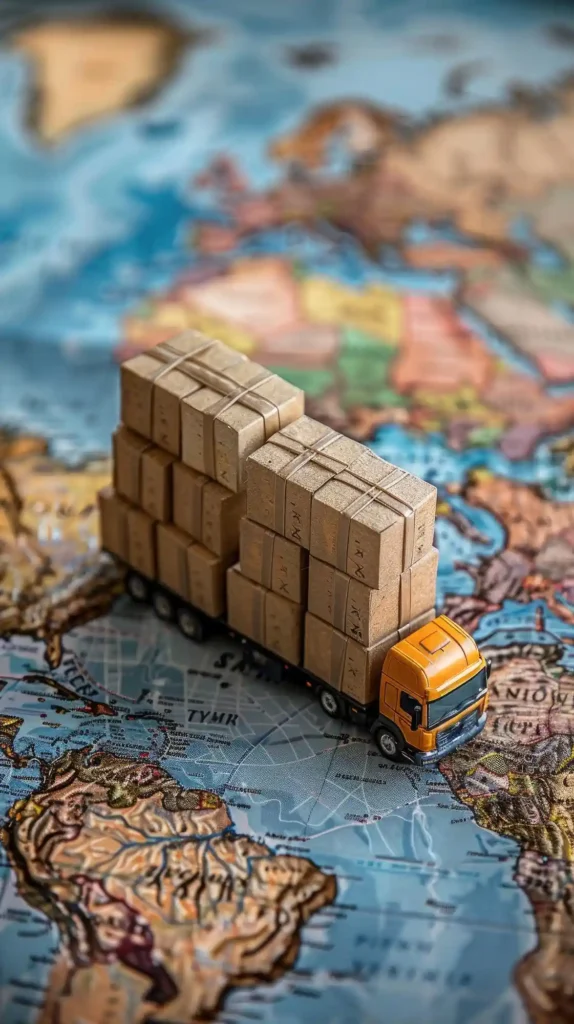
Transport for export

Conclusion

2026 will be a decisive year for international trade, marked by digitalisation, new regulatory requirements and increased controls.
With a complete and up-to-date checklist, your company will be able to:
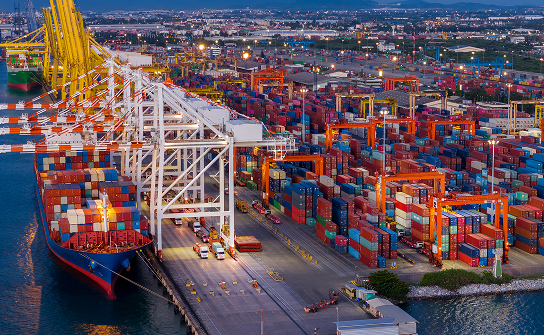
  • Export safely.
  • Reduce risks.
  • Avoid extra costs and delays.
  • Comply with international regulations.

Do you need to optimize your international trade operations?

Customs regulations are complex, but your customs management doesn't have to be. At Omnia Customs, we help you simplify your procedures, ensure regulatory compliance, and optimize your tariff costs.
consult with us
Legal pages
Legal Notice
Privacy and Cookies Policy