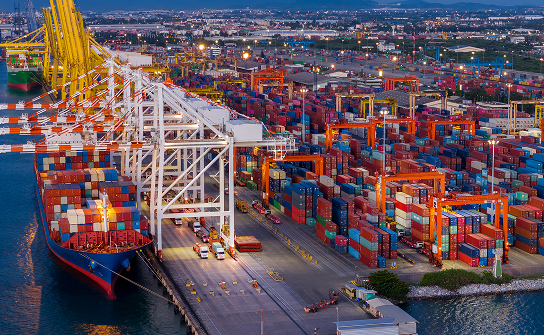
Every year, European customs authorities generate billions in revenue for the EU budget. According to the European Commission, in 2024 Member State authorities collected €26.8 billion in customs duties on imports from outside the EU. Of that amount, more than €20.1 billion — around 75% — was transferred directly to the European Union budget, representing approximately 13.7% of the EU’s total annual revenue.
International trade within the European Union (EU) is governed by a system of rules and tariffs that determine how much a company pays when importing products from third countries. This system is called the Common Customs Tariff (CCT) and is one of the pillars of European trade policy. Understanding how it works and how to take advantage of its benefits can make the difference between a profitable import and an unexpected extra cost.
At Omnia Aduanas, we explain what the common tariff is, how it is calculated and how to apply it correctly to your operations.
The Common Customs Tariff is the unified tariff that the EU applies to goods originating from non-EU countries. In other words, whenever a product enters European territory from outside the EU, it is subject to a duty determined by Brussels.
Its purpose is threefold:
The CCT covers all types of goods, from raw materials to finished products, and forms part of TARIC (Integrated Tariff of the European Community), the official customs database.
Calculating the duty applicable to an import involves three technical steps:

Each product is identified by a 10-digit TARIC code, which defines its nature and composition. This code is the starting point: it determines the customs duty rate, restrictions, licences or health measures that may apply.
You can consult it in the European Commission’s official TARIC database.
This value must reflect the actual price paid or payable, in accordance with the Union Customs Code (UCC, Article 70 et seq.).
Once the TARIC code and value have been determined, the corresponding percentage is applied according to the type of product and its origin.
Indicative examples:
• Electronics: 0–5%
• Textiles and clothing: 10–12%
• Agricultural or food products: up to 25% in some cases
Under certain preferential agreements — for example, with Chile, Mexico or the United Kingdom after Brexit — the duty may be reduced or eliminated if preferential origin is proven.
For importers, it is essential to understand what type of customs duty applies to their goods, as this directly affects the final cost.
The Common Customs Tariff includes three main types:
| Type of duty | Calculation basis | Example | Notes |
| Ad valorem | Percentage of the customs value (CIF) | 12% of €10,000 = €1,200 | This is the most common method. It is used for most industrial, textile or electronic goods. |
| Specific | Fixed amount per physical unit, weight or volume | €10/100 kg of imported coffee | Common in agricultural products, beverages or tobacco. It protects domestic production. |
| Mixed | Combination of both methods (ad valorem + specific) | 8% + €15/100 kg | Applied to sensitive products or goods with a significant impact on the European market. |
At Omnia Aduanas, we review each TARIC file to identify which type of calculation applies and how to optimise it through preferential agreements, customs value or tax warehousing.
| Case 1 – Textiles (clothing imported from China) | Case 2 – Technology (smartphones from the USA) | Case 3 – Food products (coffee from Brazil) |
| TARIC code: 6109 | TARIC code: 8517 | TARIC code: 0901 |
| Value of the goods: €10,000 | Value: €2,000 | |
| Applicable duty: 12% → €1,200 | Applicable duty: 0% | Duty: 9.6% → €192 |
| Import VAT (21%): €2,352 | VAT (21% on €500): €105 | VAT (21% on €3,192): €670 |
| Total cost: €13,552 | Total cost: €605 | Total cost: €605 |
The Common Customs Tariff can be a protection tool or an opportunity, depending on how you manage it.
At Omnia Aduanas, we help our clients reduce their customs duty burden and ensure regulatory compliance.
Some of the key actions we apply are:
The Common Customs Tariff should not be seen as an obstacle, but as a strategic variable within the supply chain.
With the right technical advice and efficient customs planning, you can save thousands of euros per operation and ensure full compliance before the authorities.