In international trade, 80% of operational, customs and legal problems arise from choosing the wrong Incoterm. Delays, unexpected extra costs, goods held at customs, contractual disputes or even the loss of cargo could have been avoided with the correct definition.
Incoterms 2020, published by the International Chamber of Commerce (ICC), universally establish who assumes costs, risks and obligations at each stage of transport. They are not contracts, but they are the operational legal basis of any international sale.
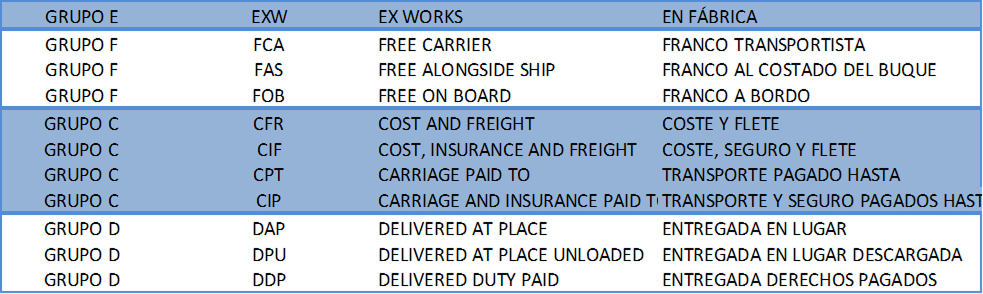
Each Incoterm rule precisely defines:
International freight, port costs, handling, clearance, insurance, etc.
This point is key, because at a specific moment in the process, the seller pays and is responsible; once that stage ends, the buyer pays and assumes responsibility.
The Incoterm defines the documents that must be provided by each party: commercial invoice, B/L, AWB, insurance, cargo declaration, packing list, certificates, etc.
At this point, for example, it is essential to know who will assume the taxes in the country of origin and destination. A poor definition is not a minor detail; it is a guaranteed conflict.
Before closing any commercial agreement, we need to know which Incoterm is most suitable for the operation.
The Incoterm determines which costs are included in the price and which are not. A poorly negotiated rule can increase the cost of a product by up to 12–18%.
If the Incoterm does not match the documentation submitted in the SAD, Customs may:
Choosing an Incoterm under which your company assumes risks it cannot control may leave you without coverage in the event of damage, delays or loss.
The Incoterm is automatically incorporated into the sales contract, becoming your legal obligation.
EXW – The buyer controls the entire process from the supplier’s premises
Suitable only for very simple domestic operations. In exports, it is not recommended due to customs risks.
FCA / FOB – The critical point is delivery to the carrier
CIF / CFR / CPT / CIP – The seller pays for transport, but the risk is transferred earlier
A common mistake made by buyers: they believe CIF protects them, but the risk passes when the goods cross the ship’s rail, not when they arrive at destination.
DAP / DPU / DDP – The seller delivers at destination
More convenient for the buyer, but with significant customs implications under DDP.
Common outcome:
The ICC recommends FCA for containers; the FOB Incoterm creates conflicts over who assumes damage at the terminal.
The buyer receives the insurance, yes, but the risk is transferred before transport. If the damage occurs after loading, the seller is no longer responsible.
Every contract, every customer, every port and every customs authority requires a different technical decision.

The main variables to consider are the following:
At Omnia Aduanas, we see companies every day that lose margin or become legally exposed because they have not chosen the right rule.
For Spanish and European exporters, we recommend moving from EXW to FCA, because: