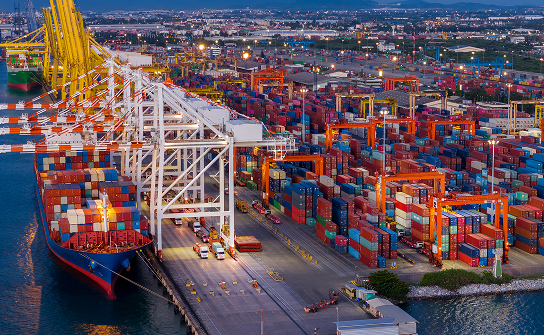
All non-Union goods, from the moment they are presented to customs, enter a temporary storage situation. This phase is not optional, nor does it depend on how the importer wishes to manage it. It is a customs legal status regulated by the Union Customs Code and by the Spanish Tax Agency. The ADT is the authorised facility where those goods may remain under customs supervision until their customs destination is decided.
The problem is that many companies still confuse the ADT with a simple logistics warehouse or with a customs warehouse. And they are not the same. The ADT is not designed to store goods strategically or to postpone a commercial decision indefinitely. It is used to keep the goods in custody during a transitional phase, under customs control and within a legally defined time limit.
At Omnia Aduanas, we see this situation frequently: goods arriving without the required documentation fully completed, inspections that had not been anticipated, operators who believe they can “leave the cargo in ADT until they decide” and end up facing delays, costs and operational pressure. The ADT can be a useful tool, but only when its function is properly understood and the operation is managed with clear criteria from the very beginning.
The Spanish Tax Agency defines a temporary storage facility as a place authorised by the customs authorities for storing goods. It is not, therefore, just any warehouse or a standard storage solution. It is a facility subject to authorisation and to specific customs control conditions.
Its function is to hold non-Union goods while they are in temporary storage. In other words, while they have not yet been placed under a definitive customs procedure or re-exported. This distinction is important because it defines the entire logic of the operation.
From the moment they are presented to customs, non-Union goods are placed in temporary storage and must be covered by a temporary storage declaration submitted, at the latest, at that same moment, except in the specific cases provided for goods arriving under transit. The AEAT itself allows, in certain cases, specific documents or references to fulfil this function, provided they contain the required data.
In practical terms, the ADT is the space where goods remain under customs control while the next step is arranged: release for free circulation, transit, placement under another customs procedure or re-export. The ADT does not replace that subsequent step. It only precedes it.
There is no room here for flexible interpretations. Article 149 of the Union Customs Code establishes that non-Union goods in temporary storage must be placed under a customs procedure or re-exported before 90 days have elapsed.
This means that the ADT cannot be used to store goods without limit or to delay commercial decisions for weeks without a clear strategy. It is used to properly manage an arrival, organise controls and close the phase prior to the definitive procedure within a specific legal deadline.

The regulations are clear: goods in temporary storage may not be subject to any handling other than that intended to ensure they remain unchanged, without modifying their presentation or technical characteristics. This limit is essential.
In other words, the ADT is not designed to transform, commercially recondition or prepare goods as if it were a customs warehouse or a processing procedure. In an ADT, goods are preserved and kept in custody; they are not redesigned, nor is the underlying operation altered.

The Union Customs Code establishes that goods in temporary storage shall be stored only in temporary storage facilities or, in justified cases, in other places designated or approved by the customs authorities. It also states that the holder of the authorisation, or the person storing the goods in the authorised places, must ensure that the goods are not removed from customs supervision and must comply with the obligations arising from storage.
In addition, operating an ADT requires authorisation from Customs. The AEAT itself maintains a specific procedure for the authorisation of temporary storage facilities, processed electronically and aimed at companies.
This is not a minor administrative detail. It means that an ADT requires structure, control, traceability and a real capacity for compliance. A poorly managed ADT leaves no operational margin. What it creates is exposure before Customs.
The ADT is useful when the goods have already arrived and the company needs a control phase before the definitive procedure. It is useful when it is necessary to coordinate inspections, validate documentation, organise the arrival or avoid a rushed and poorly planned customs clearance. In this scenario, the ADT allows the goods to remain under customs control within the established legal framework.
It is also useful when the physical arrival of the goods does not coincide with the importer’s immediate ability to clear them correctly. Not because it allows the decision to be “parked”, but because it provides a legal channel to organise that initial phase without losing documentary or customs control.
It should not be confused with a customs warehouse. A customs warehouse follows a different logic: that of a special storage procedure. The ADT, by contrast, forms part of the prior, transitional and limited phase that follows presentation to customs. Anyone who mixes up these two concepts usually ends up designing the operation, cost and timing incorrectly.
Nor should it be used as a resource for operating with incomplete documentation and no clear decision. The 90-day period continues to run. Customs supervision remains in place. And the obligation to assign a customs destination to the goods does not disappear simply because they are stored in an ADT.
The ADT is not a secondary figure in import operations. It is the point where many operations begin to go off track: because the goods arrive without planning, because temporary storage is confused with other figures, or because a decision is delayed even though the regulations require it to be closed within the deadline.
Managing it properly requires knowledge of the rules, but also knowing when it is advisable to clear the goods, wait, review documentation or redirect the goods to another route. That is where the real cost is avoided: delays, incidents, unproductive storage and poorly planned customs decisions.
At Omnia Aduanas, we do not only analyse whether the ADT legally fits your operation. We also have our own ADT, which allows us to take on the operational side with a real temporary storage solution under customs control when the goods are already in transit or have just arrived.
This combination of technical judgement, customs representation and ADT availability reduces improvisation, shortens downtime and strengthens traceability at the most delicate point of the import process.
If you need to organise an arrival, coordinate an inspection or avoid a rushed clearance, it is worth reviewing the operation before the deadline starts working against you. At Omnia Aduanas, we can analyse the operation, take over the management and provide you with a technical and operational response from the very beginning.