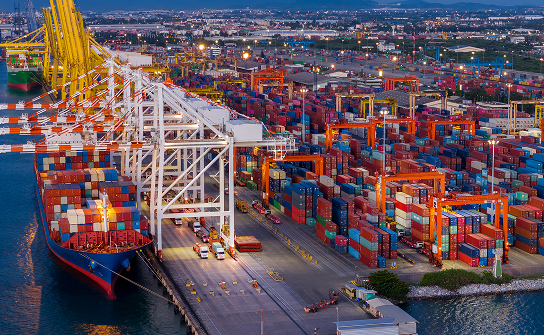
Importing fish, shellfish or seafood products from a third country requires a series of requirements to be completed before the goods leave their country of origin.
Product classification, species, country of origin, production establishment, health certificate, food business operator registration, storage location and Border Control Post are all part of the same operation.
When the imported species is also subject to CITES, as is the case with sturgeon caviar, there is an additional authorization process that cannot be left until after shipment.
In a real operation managed by Omnia Aduanas involving Acipenser baerii caviar from Chile, two requirements that had previously been identified were not completed in time by the importer: the CITES procedure and the health compliance requirements applicable to the operator and the destination establishment.
The consequence is clear: goods may have arrived correctly in Spain and still not be in a position to be cleared through customs.
There is no single procedure for importing “seafood products”.
The requirements vary depending on the species, origin, production process, presentation and intended use. Frozen fish, crustaceans, live bivalve molluscs and aquaculture-produced caviar are not subject to the same treatment.
This is why the first mistake often occurs before the goods even reach Customs: purchasing the goods and arranging transport without first determining which controls actually apply to the product.
The case used as our reference concerns a commercial import of Siberian sturgeon caviar (Acipenser baerii) produced through aquaculture in Chile and intended for human consumption in Spain.
Although the operation involved a relatively small quantity, the goods were simultaneously subject to:
The complexity of an import operation does not depend on the number of kilograms involved.
It depends on how many requirements must be fulfilled before those kilograms can legally enter the European Union market.
Before importing, the following must be precisely established:

In the case analysed, declaring “caviar” was not sufficient. It was necessary to work with a specific species, Acipenser baerii, produced through aquaculture and intended for human consumption. This identification determines the tariff classification and the applicable health and CITES controls.
Products of animal origin from third countries are subject to the official control regime established by Regulation (EU) 2017/625. Consignments covered by Article 47 are subject to official controls at Border Control Posts.
For products intended for human consumption, the entry conditions established, among other provisions, by Commission Delegated Regulation (EU) 2022/2292 must also be reviewed.
Commission Implementing Regulation (EU) 2021/405 establishes the relevant lists for different categories. In the case of fishery products intended for human consumption, Article 13 refers to the third countries or regions listed in Annex IX.
The fact that a supplier has carried out other international exports does not in itself prove that that specific product can enter the EU from that specific establishment.
When the product requires official health certification, it must be issued by the competent authority of the third country in accordance with the model applicable to the goods.
Before shipment, the following must be correctly defined:
A health certificate is not a standalone document. It forms part of a documentary chain that must remain consistent from origin to destination.
This is one of the most important aspects of a food import operation. Having a Spanish tax identification number (NIF) and an EORI number allows a company to operate for tax and customs purposes, but does not replace the health requirements applicable to a food business.
Regulation (EC) No 852/2004 establishes the framework for the registration of food business establishments. For food of animal origin, Regulation (EC) No 853/2004 must also be taken into account.
In Spain, the situation must also be checked in the General Health Register of Food and Food Businesses (RGSEAA). AESAN expressly distinguishes between establishments and food businesses that do not have an establishment.
There are two controls here that must not be confused.
The importing company:
The company must be properly registered or authorized, as applicable, for the food-related activity it intends to carry out.
The establishment where the product will be received or stored:
The physical destination must also be reviewed. The establishment where the goods will be received, stored or handled must have the registration or authorization required for the activity carried out there.
The health status of the company and that of the establishment are two separate checks.
A properly registered company does not automatically make any warehouse a valid destination. Likewise, having a suitable establishment does not replace the obligations applicable to the food business operator.

AESAN provides an official search tool for companies and establishments registered in the RGSEAA.
In the caviar operation analysed, this requirement had already been identified during the advisory process. However, the importer began the operation without having properly completed the necessary health registration requirements for the operator and the establishment intended to receive the goods.
When this deficiency is detected after the goods have already been dispatched, the problem is no longer merely administrative: it becomes an operational blockage affecting a perishable food product.
Sturgeon caviar is subject to an additional control. Its trade is regulated under CITES and, within the European Union, by Council Regulation (EC) No 338/97.
For species included in Annexes A or B, MITECO establishes the requirement for the corresponding import permit and recommends applying for it at least one month in advance, since certain applications require an individual assessment depending on the species, country of origin or purpose. The one-month recommendation does not guarantee that the application will be resolved within that period.
This distinction is critical. Submitting a CITES application does not mean that a CITES permit has been obtained.
The procedure may require assessment by the Management Authority, intervention by the Scientific Authority and, where applicable, the issuance of a Non-Detriment Finding. This is what occurred in the operation used as our reference.
The CITES requirement had been identified from the outset, but the logistics planning moved ahead before the authorization had actually been obtained.
An import operation involving CITES-controlled goods should never be arranged on the assumption that the permit will be available when the shipment arrives. For a perishable product, this decision also directly affects the remaining commercial shelf life.

There is another important particularity. Caviar is subject to a specific labelling system. Commission Regulation (EC) No 865/2006 establishes that certain caviar containers must be individually marked using non-reusable labels affixed to each primary container.
Having the permit on paper is not sufficient if the containers subsequently fail to maintain the required traceability.
For products of animal origin, the airport or port of entry cannot be selected solely on the basis of price, frequency or logistical convenience. The goods must enter through a Border Control Post authorized for the relevant category.
In addition, the operator responsible for the consignment must provide prior notification through the corresponding CHED in TRACES before arrival. Regulation (EU) 2017/625 establishes the use of the CHED for consignments subject to border controls, while the implementing legislation regulates prior notification.
For a consignment such as the one analysed, the health control procedure is carried out through CHED-P.
Doing it the other way around may require changing the route after the operation has already been finalized.
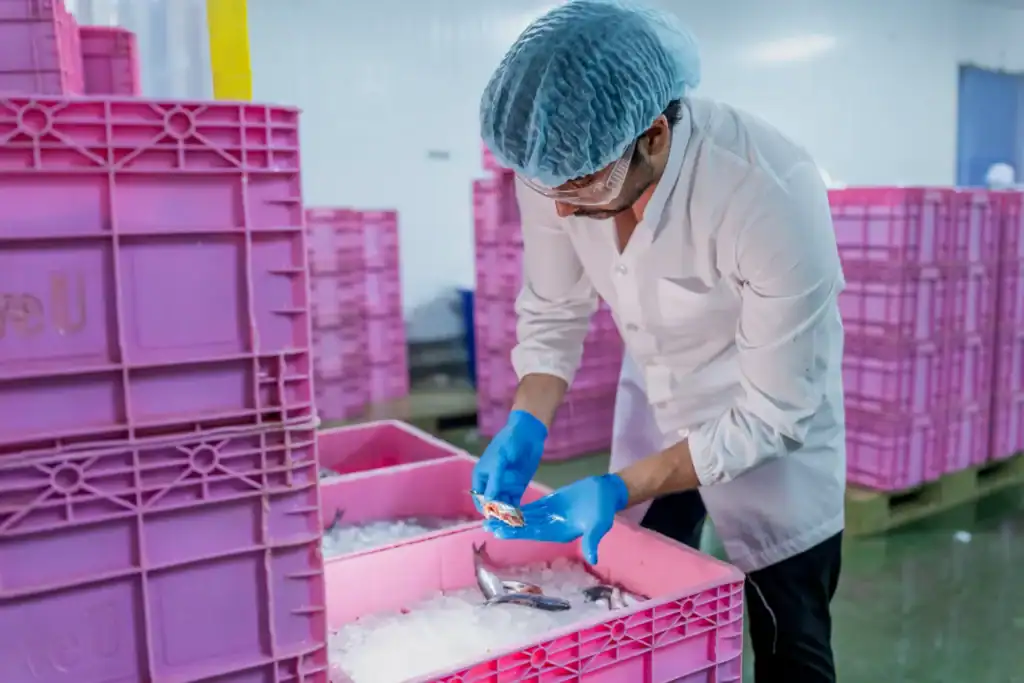
A seafood import operation may simultaneously involve:
There cannot be eight different versions of the same goods.
An apparently minor discrepancy may prevent the authority from correctly linking the physical goods to the document intended to cover them.
When dealing with refrigerated fish, shellfish or caviar, any administrative issue has an additional consequence: time is working against the product.
A hold may result in:
This is why the regulatory timetable cannot be treated separately from the logistics timetable.
For perishable goods, a pending authorization is also a logistics risk.

Submitting the customs declaration does not replace a CITES permit, a health requirement or the correct registration status of the food business operator.
Goods subject to the official controls established under Regulation (EU) 2017/625 must successfully complete the corresponding control procedure before they can complete their entry into the European Union market.
Trying to begin with the final step merely transfers to the border problems that should have been resolved at origin.
When importing fish, shellfish or seafood products from a third country, shipment should not be authorized until, at a minimum, the following have been verified:
If any of these requirements is still pending, the operation is not yet ready.
Importing seafood products is not about gathering documents once the goods are already in transit.
It is about determining before shipment whether the product can enter, who can import it, where it can be stored, which authorization it requires and through which point of entry it must be presented.
The caviar import operation from Chile used as our reference illustrates two particularly significant risks.
The first is CITES: the authorization must be processed sufficiently far in advance, and transport cannot be planned on the assumption of a decision date over which the importer has no control.
The second is RGSEAA and health authorization: both the status of the company carrying out the food-related activity and the status of the establishment where the goods will be received or stored must be verified. They are separate requirements, and one does not replace the other.
In this case, both issues had previously been identified during the advisory process. Failing to complete them before starting the operation transferred the risk to a stage at which the goods were already constrained by their perishable nature.
That is precisely the scenario that must be avoided.
At Omnia Aduanas, we analyse the operation before shipment: tariff classification, health requirements, RGSEAA, destination establishment, CITES, Border Control Post and the documentation required for subsequent customs clearance.
If your company is preparing to import fish, shellfish, caviar or another product of animal origin from a third country, contact Omnia Aduanas before confirming the order or booking transport.
The first decision should not be when to ship.
It should be whether the operation is ready to pass the controls when it arrives in Spain.