Importing cosmetics and personal care products from countries outside the European Union requires compliance with health, regulatory and customs requirements before the goods arrive in Spain.
The importer must verify the legal classification of the product, the obligations established by the Spanish Agency for Medicines and Medical Devices (AEMPS), the technical documentation and the labelling requirements.
In the case of cosmetics, having a responsible declaration of activities does not replace the obligation to have a responsible person established in the European Union, a safety assessment and the corresponding CPNP notification.
In addition, the products are subject to health controls at the border, which are processed through the SIFAEX system.
Goods that do not meet the applicable requirements may be detained or rejected, even if the importer has a commercial invoice, arranged transport and customs documentation.
The feasibility of the import operation must be verified before confirming the purchase or authorising the shipment.
A Spanish company may purchase creams, perfumes, makeup, shampoos, hair care products and other hygiene or personal care items from manufacturers established in third countries. However, the fact that these products can legally be marketed in the country of manufacture does not prove compliance with the requirements established in the European Union.
These issues may lead to requests for additional information, further inspections, detention or rejection of the goods. The risk increases when problems are detected after the goods have been dispatched.
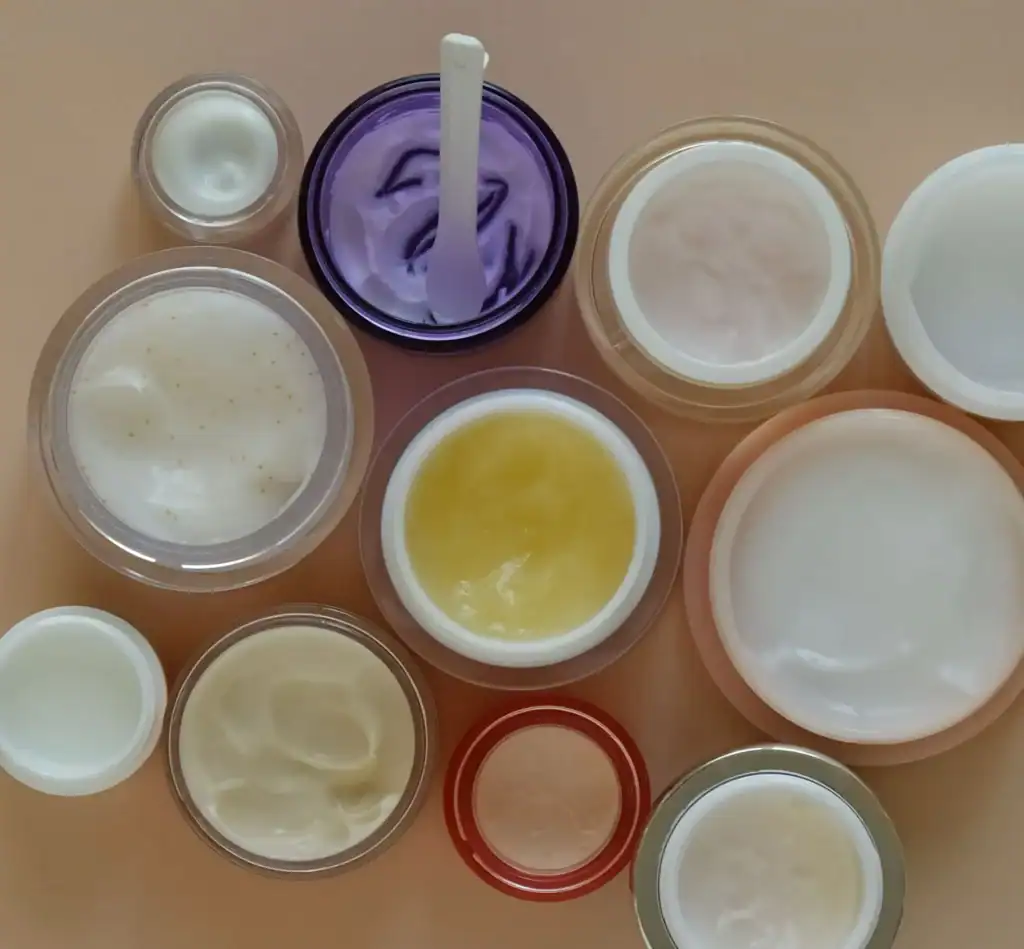
The regulatory classification must be determined before placing the order. Article 2 of Regulation (EC) 1223/2009 defines a cosmetic product according to its composition, intended purpose and area of application. The manufacturer's commercial product designation does not, by itself, determine its legal classification.
In Spain, certain personal care products are subject to a specific regulatory framework different from that applicable to cosmetics. Depending on the product, a responsible declaration of activities, health authorisation for marketing and specific technical documentation may be required.
The PCP_DR application allows the responsible declaration of activities relating to personal care products to be submitted electronically. It must not be confused with COSMET2_DR for cosmetics.
Operational implication: Identify the regulatory category of the product before importing it.
Article 18 of Royal Decree 85/2018 establishes the responsible declaration of activities that importers of cosmetics from third countries must submit before starting their activities. It is submitted through COSMET2_DR.
It is a declaration of activities, not an individual authorisation for each shipment. Its valid submission does not automatically prove that all products comply with the applicable requirements.
It must be verified that the declared activities match those actually carried out and that the importer can demonstrate compliance with the required resources, procedures and conditions.
Article 4 of Regulation (EC) 1223/2009 requires a responsible person established in the EU for every cosmetic product placed on the market.
As a general rule, in the case of imported products, the importer is the responsible person. The importer may designate another person established in the EU by written mandate, which that person must expressly accept.
The responsible person must ensure compliance with safety requirements, the product information file, notification, labelling and all other applicable obligations. Their name or company name and address must appear on the labelling in accordance with the provisions of the Regulation.
It must not be assumed that the manufacturer established outside the EU fulfils this requirement on its own.

Article 10 requires a safety assessment and a safety report prepared by a person with the legally required qualifications.
Article 11 requires a Product Information File (PIF) containing a description of the product, the safety report, information on manufacturing and good manufacturing practices, proof of the effects claimed for the product when applicable, and data on animal testing under the terms established by the Regulation.
The file must remain accessible to the competent authority and be retained for ten years from the date on which the last batch was placed on the market.
The documentation must correspond to the actual formulation and presentation of the product, rather than being limited to a commercial product specification sheet.
Article 13 requires certain information about the cosmetic product to be notified through the Cosmetic Products Notification Portal (CPNP) before the product is placed on the market.
CPNP notification does not constitute health authorisation and does not replace the PIF, the safety assessment, COSMET2_DR or health controls at the border.

The formulation must be verified against the current annexes and amendments to Regulation (EC) 1223/2009, taking into account prohibited and restricted substances, their concentrations, permitted uses and applicable dates.
Relevant amendments include Regulations (EU) 2026/78 and 2026/909. Each substance must be assessed according to its specific regulatory requirements and the applicable transitional provisions.
Regulation (EU) 2023/1545 amended the labelling obligations for fragrance allergens. The transitional period for placing certain non-compliant products on the market ended on 31 July 2026; 31 July 2028 refers to the making available on the market of certain previously placed stocks, subject to the conditions established by the Regulation.
The 2028 deadline does not constitute a general authorisation to place new non-compliant products on the market.
Article 19 of Regulation (EC) 1223/2009 establishes mandatory labelling information and exceptions concerning containers and packaging.
As applicable, the name and address of the responsible person, country of origin of the imported product, nominal content, date of minimum durability or period after opening, precautions for use, batch number, product function and list of ingredients must be verified.
Language requirements in Spain must be determined in accordance with the Regulation and Article 6 of Royal Decree 85/2018: not all mandatory information is subject to exactly the same language rules.
It must not be assumed that a labelling defect can always be corrected at the border or that every defect automatically results in definitive rejection: this depends on the specific case and the competent authority.
The importation of cosmetics from third countries is subject to health controls carried out by the Pharmaceutical Inspection Services. Electronic processing is conducted through the SIFAEX system.
Depending on the goods and the procedure, the inspection may include documentary, identity and physical checks. Information about the product, the importer and commercial documentation may be required.
Submitting a request for inspection does not mean that a favourable outcome has been obtained. Non-compliance may prevent the planned customs clearance and result in rejection or administrative measures. The documentation must be prepared before shipment.
Goods must be classified according to their objective characteristics. Not all products marketed as hygiene or personal care items are necessarily classified under Chapter 33.
Before customs clearance, the TARIC classification must be checked, along with the origin, customs value and applicable customs procedure.
Relevant documentation may include the EORI number, invoice, packing list, transport documents, technical description, classification, origin, customs value and the outcome of the health inspection.
Customs value is determined in accordance with the Union Customs Code and is not necessarily limited to a simplified sum of price, insurance and transport costs.

☐ Exact regulatory classification of the product.
☐ Product composition and manufacturer's technical documentation.
☐ Review of prohibited and restricted substances.
☐ Responsible declaration of import activities to AEMPS, when required.
☐ Responsible person established in the European Union.
☐ Safety assessment and PIF documentation.
☐ CPNP notification, when applicable.
☐ Labelling and language requirements for Spain.
☐ PCP_DR and marketing authorisation for personal care products, when applicable.
☐ Health inspection documentation through SIFAEX.
☐ TARIC classification, origin and customs value.
☐ Invoice, packing list, transport documents and delivery terms.
☐ Confirmation of preliminary requirements before shipment.
This checklist is a preliminary tool. The specific obligations must be determined according to the product category, operator, origin and transaction.
Importing cosmetics and personal care products involves more than arranging transport and preparing a customs declaration. It requires prior verification of the legal classification, the importer, AEMPS obligations, composition, technical documentation, labelling and health controls.
Goods that have been correctly invoiced and transported may still fail to meet the requirements needed to pass health inspections at the border or to be legally placed on the Spanish market.
At Omnia Aduanas, we assess the customs requirements and health controls applicable to each operation in advance, identifying the obligations that must be fulfilled before scheduling the shipment.
Contact Omnia Aduanas before confirming the purchase or authorising the shipment. A preliminary technical review helps identify regulatory obstacles and determine which documentation must be prepared.